Are you buying a competitor analysis app to understand rivals' websites, or to understand why AI assistants recommend them instead of you? Those are different questions, and buying the wrong tool leaves the important one unanswered.
An SEO suite can reveal keyword gaps without telling you when a rival changes its pricing. A webpage monitor can capture that pricing change without explaining which sources influence an assistant's recommendation. An AI-visibility platform can track selected buyer prompts without revealing a competitor's actual website traffic or revenue.
Choose by the decision you need to make, not by the longest feature list. Traditional competitor research covers traffic, keywords, backlinks, pages, and market changes. AI visibility covers how supported assistants mention, position, and describe brands in sampled answers.
That distinction also changes how you interpret results. Estimated traffic isn't first-party analytics, a citation isn't an endorsement, and an AI mention isn't a conversion. The same caution applies when interpreting what Shopify traffic tools actually reveal: use outside-in measurements to form hypotheses, then validate them against evidence you control.
The options below suit different teams. MyMentions focuses on AI-answer visibility and follow-up work; Similarweb, Semrush, Ahrefs, SpyFu, SE Ranking, and Moz Pro support traditional digital research; Crayon and Klue organize competitive intelligence; Visualping watches selected webpages. Buy the tool that answers your immediate question, then add complementary coverage where you have a genuine blind spot.
Table of Contents
- 1. MyMentions
- 2. Similarweb
- 3. Semrush
- 4. Ahrefs
- 5. SpyFu
- 6. SE Ranking
- 7. Moz Pro
- 8. Crayon
- 9. Klue
- 10. Visualping
- How the competitor analysis app options compare on price, trial access, and primary focus
- Building a Competitor Research Stack That Fits Your Team
1. MyMentions
Choose MyMentions if your SaaS or digital-product team needs to understand how it appears in AI-generated buying recommendations. Its central workflow starts with buyer-intent prompts rather than competitor domains or keyword rankings.
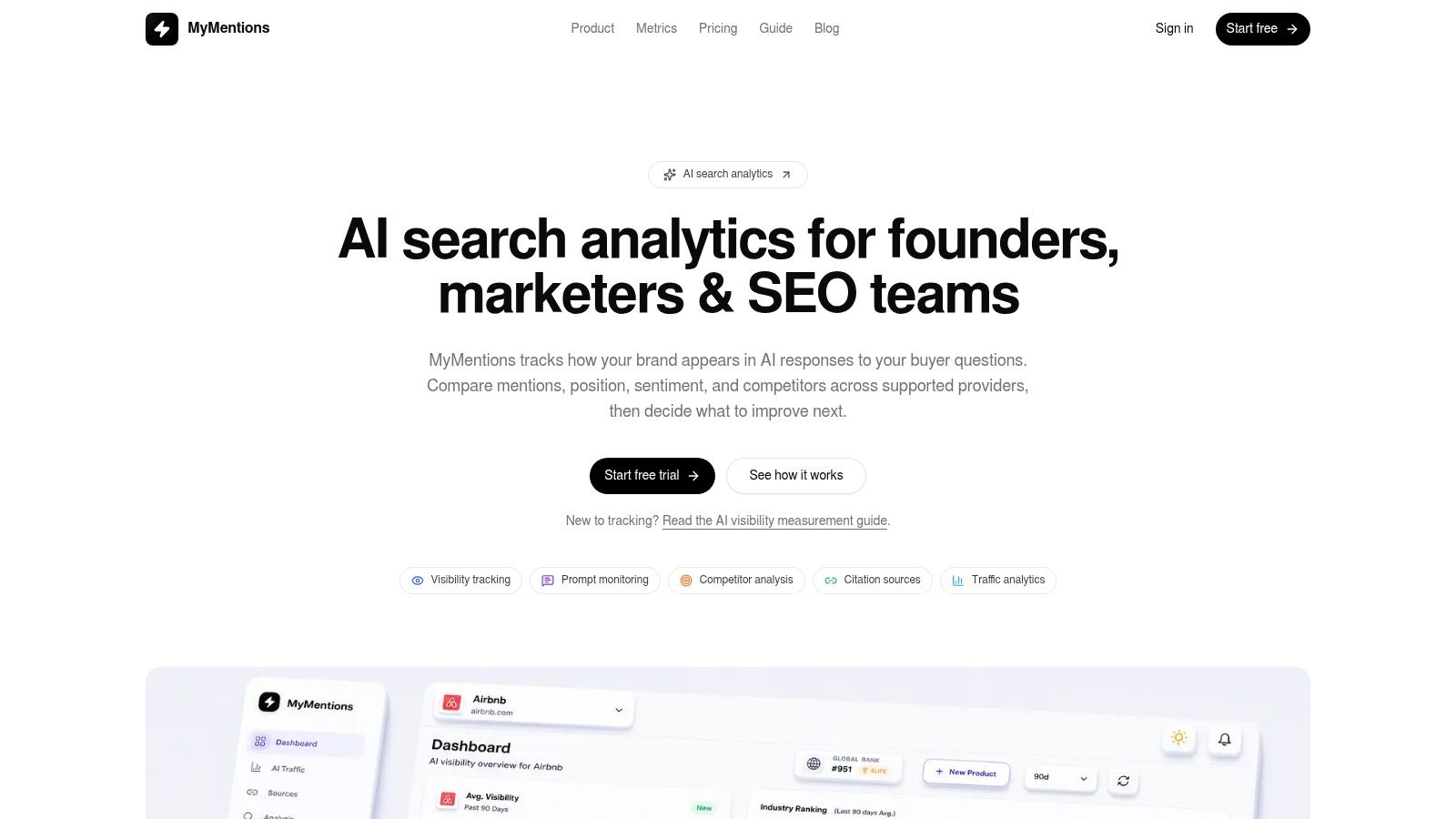
The workspace brings together visibility, average position, sentiment, competitor presence, citation sources, and detectable AI-referred website traffic. That lets you investigate whether an absent recommendation coincides with missing documentation, weak comparison content, or sources that describe your product inaccurately.
Best for turning observations into work
Its distinctive strength is the connection between prompt-level findings and a prioritized work queue. Pro and Enterprise include detailed site, content, and UX recommendations, so your team can move from noticing a gap to assigning an investigation or change.
- Starter: The published plan is $49/month for 25 daily provider checks across OpenAI, Google Gemini, and Perplexity, according to MyMentions' plan information.
- Pro: The same published plan information lists $99/month for 50 daily checks, eight providers, two seats, recommendations, and Slack, Discord, or email alerts.
- Enterprise: The published plan lists $199/month for 100 daily checks, five seats, scheduled reports, and competitor tracking; paid plans include a seven-day free trial.
Skip it as your primary tool for backlinks, competitor traffic estimates, or pricing-page surveillance. Coverage comes from selected prompts and provider API checks, not every consumer AI-search experience, and excludes Google AI Overviews, Google AI Mode, and Microsoft Copilot.
Treat the sample dashboard as illustrative, not as measured customer outcomes. Recommendations don't guarantee improved rankings or conversions, and the product content supplies no named customer testimonials, awards, or certifications. For broader listening needs, compare the scope of brand monitoring tools before choosing your stack.
2. Similarweb
Similarweb is the choice for teams asking where competitors attract attention across digital channels. Use it to compare estimated website traffic, engagement, audience geography, acquisition channels, and audience overlap.
The listed Competitive Intelligence plan costs $125/month billed annually or $199 monthly, according to Similarweb. Broader marketing intelligence and higher-tier AI-visibility capabilities require a separate look at package access.
A growth team could use channel comparisons to investigate whether a rival depends heavily on search, referrals, or paid acquisition. That's a useful starting point for deciding which channel deserves deeper research, not permission to copy the competitor's spending.
Practical rule: Treat competitor traffic estimates as directional benchmarks, never as access to a rival's analytics account.
Where Similarweb stops
Buy it for market context and cross-channel comparisons. It offers a broader view than a dedicated keyword tracker, with SEO intelligence and competitor alerts alongside traffic research.
Skip it if your immediate need is a simple pricing-change alert or an actionable backlog for selected AI prompts. Available history, granular coverage, and features vary by plan, so test your actual competitor domains before purchasing.
Build a consistent comparison set using the same geography, period, and channel definitions. A disciplined competitor benchmarking workflow will give your team more useful conclusions than comparing unrelated headline traffic totals.
3. Semrush
Your SEO and paid-search teams often investigate the same competitors from different angles. Semrush suits teams that want those investigations in a broad digital-marketing platform.
Semrush supports domain comparisons, keyword-gap analysis, organic and paid-search competitor discovery, backlinks, and competitor activity research. It also offers AI visibility and prompt-level competitor research, but access depends on the toolkit and subscription you select.
For example, your content team can identify commercial queries a rival covers while your acquisition team investigates related paid-search activity. Keeping those questions together helps you distinguish a genuine content opportunity from a term that matters mainly to advertisers.
Buy the toolkit, not the brand promise
- Buy it for: Connected SEO and PPC research, multiple ways to discover competing domains, and a broad range of follow-up workflows.
- Check before paying: Which AI capabilities, domains, seats, exports, and monitoring allowances belong to the actual subscription.
- Skip it for: A narrowly defined webpage-monitoring task where most of the suite would sit unused.
The trade-off is complexity. Your team needs time to learn the relevant reports and agree which measurements will drive decisions.
Don't assume an SEO subscription includes the AI workflow you need. Test the exact prompts, competitor comparisons, and citation views available in the proposed package. Traffic and search metrics remain estimates, and neither those estimates nor AI visibility establish a rival's conversion performance.
4. Ahrefs
Choose Ahrefs when competitor research primarily means organic-search pages, keywords, and backlinks. It's a strong fit for SEO teams deciding what to publish, improve, consolidate, or promote.
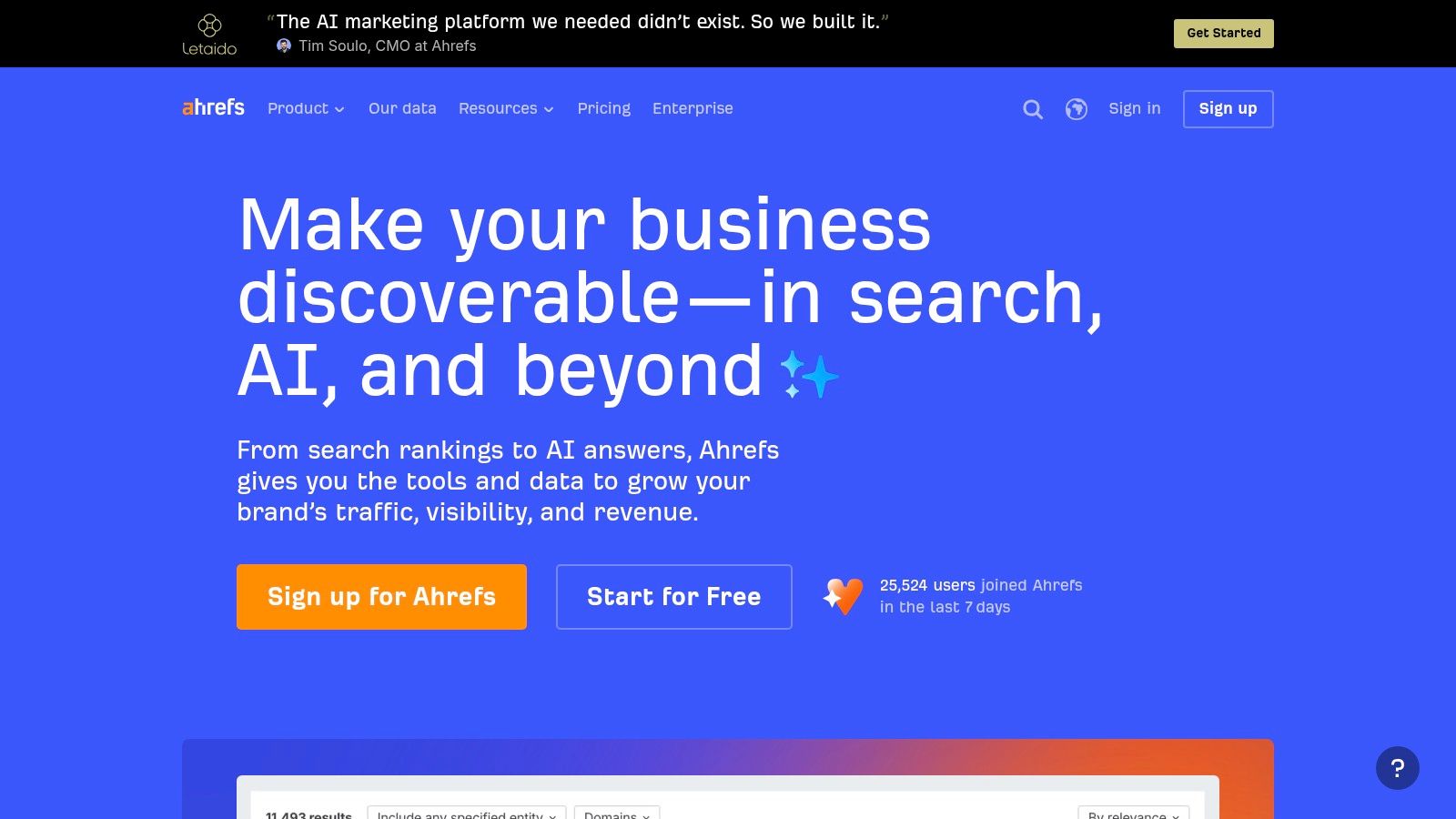
Site Explorer and Keywords Explorer support investigation of competing domains and search opportunities. Rank tracking and site audits help connect that outside-in research with work on your own website.
Start with the competing page
Rather than comparing domain totals alone, inspect the pages competing for the intent you want to serve. Review their search coverage, backlinks, format, and product relevance before deciding whether your team should create something similar or take a different approach.
- Pricing: Ahrefs lists Lite at $129/month, Standard at $249/month, Advanced at $449/month, and a more limited Starter plan at $29/month.
- AI scope: Brand Radar and tracked AI prompts are available on eligible plans; check allowances and add-ons rather than assuming inclusion.
- Access limits: Its free account is limited and primarily useful for your own sites, not unrestricted competitor investigation.
Skip Ahrefs as a replacement for sales intelligence or ongoing pricing surveillance. Its primary strength is SEO research, and smaller teams should confirm that the plan they can afford includes the competitor workflows they need.
Use estimated organic performance to prioritize investigation. It won't tell you whether a competitor's high-visibility page produces qualified leads or profitable customers.
5. SpyFu
Say your acquisition manager wants to investigate a rival's paid-search messaging before rebuilding a campaign. SpyFu is a focused choice for that search-marketing question, particularly when keywords, ad copy, and historical advertising activity matter more than whole-market intelligence.
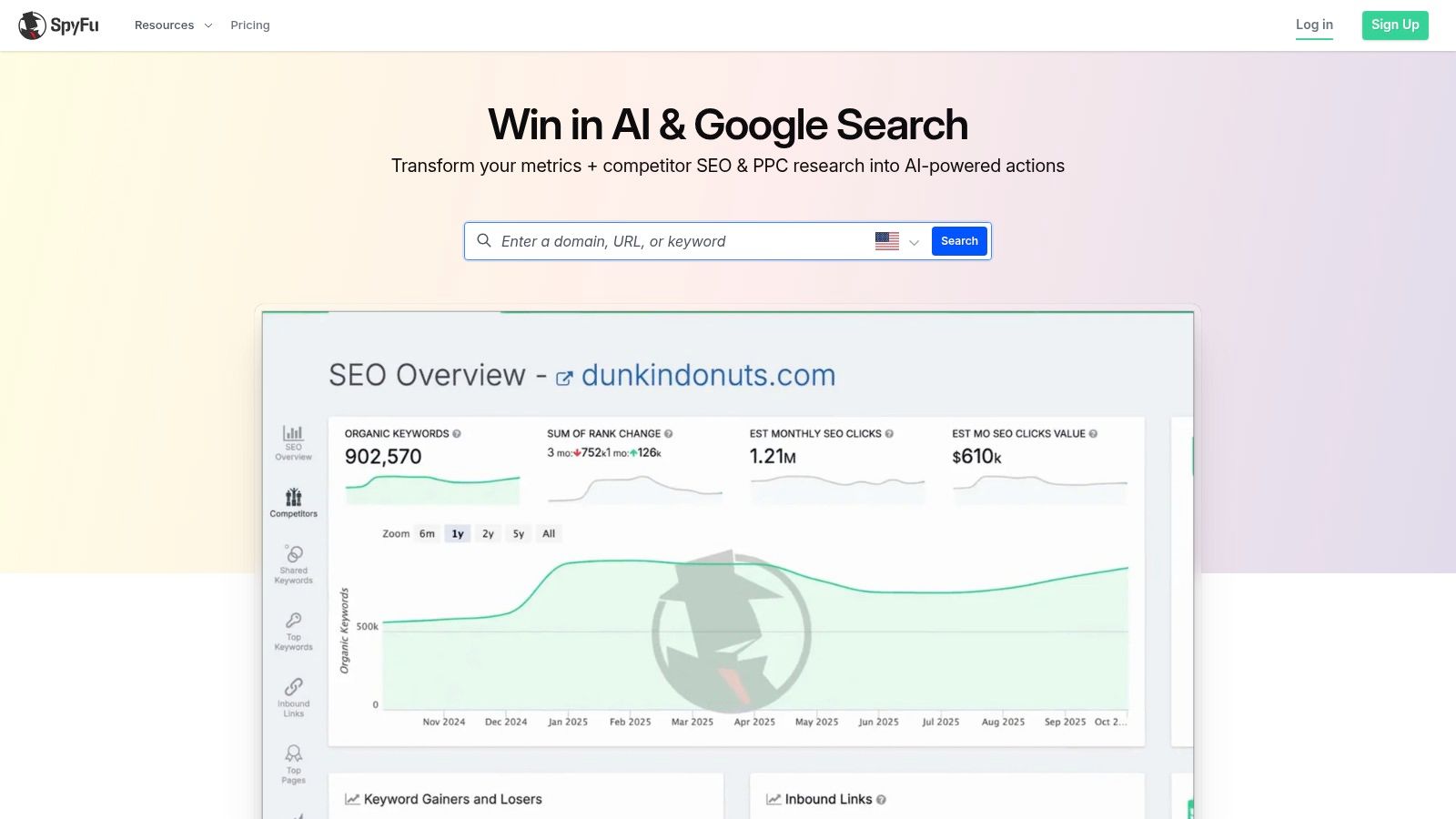
SpyFu supports organic and paid-keyword research, competitor discovery through shared search activity, and keyword organization. Historical ad and keyword access depends on the plan.
Useful evidence, not a campaign blueprint
Review recurring ad messages alongside the landing pages and search intent they address. Repeated advertising can justify further investigation, but it doesn't prove the advertiser earns a positive return.
- Buy it for: Focused SEO and PPC competitor research, especially when your team wants to inspect advertising patterns.
- Check the package: Basic, Pro + AI, and Team/Agency differ in access and capabilities; consult current plan details before committing.
- Skip it for: Broad competitive-intelligence distribution, pricing-page monitoring, or a dedicated AI-answer measurement workflow.
SpyFu's narrower scope is an advantage if your team already knows its research question. It's less attractive if you need a single workspace for technical SEO, market intelligence, sales enablement, and assistant visibility.
Validate search estimates against your own campaign results. A competitor keyword is a candidate to evaluate, not an instruction to bid. Your margins, positioning, landing page, and customer fit still determine whether it belongs in your account.
6. SE Ranking
SE Ranking suits teams that want competitor SEO research alongside ongoing rank tracking and site maintenance. Its core platform combines competitor keyword and traffic research with backlink investigation, position comparisons, and website audits.
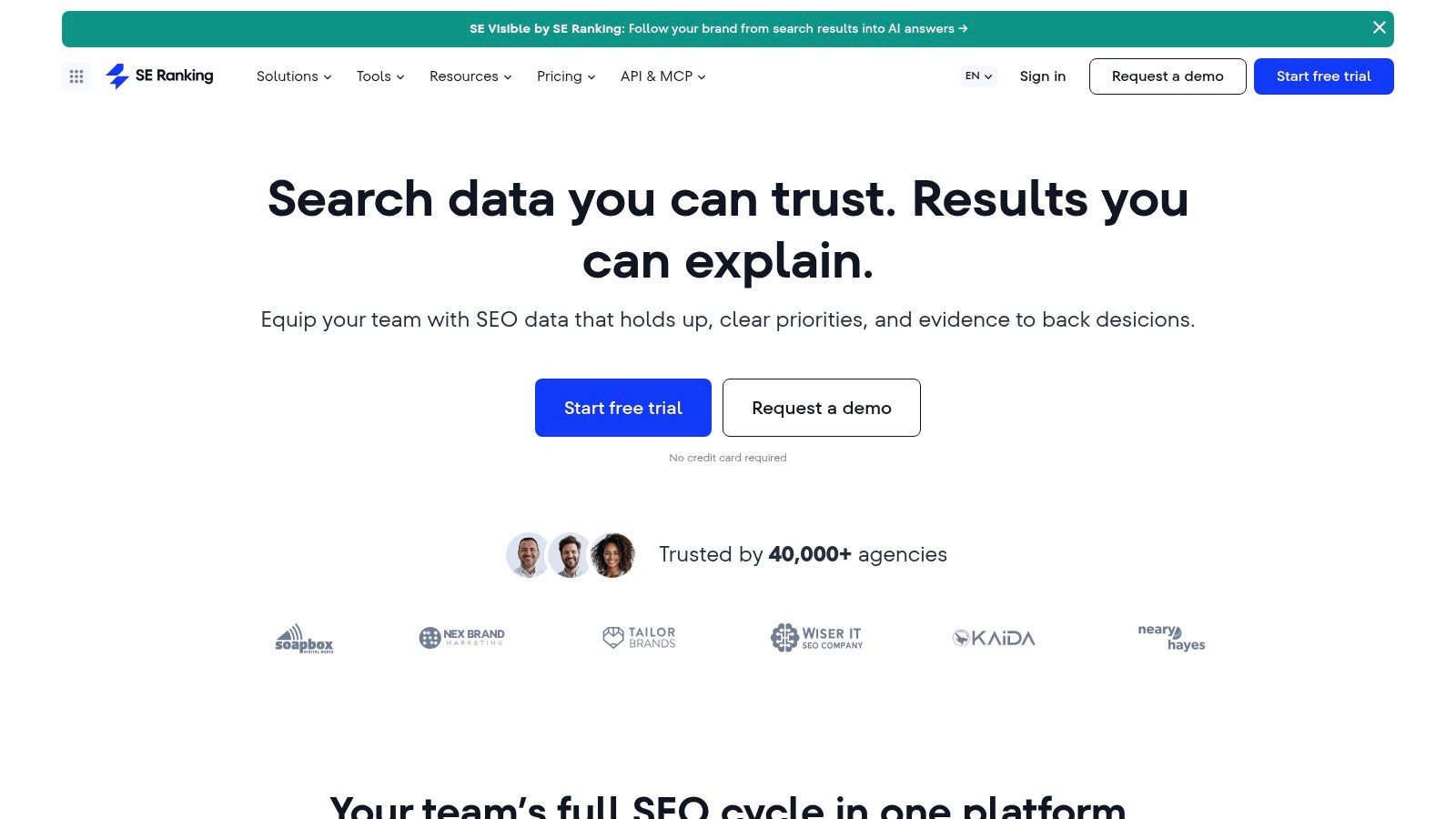
The practical benefit is continuity: investigate a competitor's keyword coverage, select relevant targets, then track your progress alongside competing domains. That's a sensible workflow for an SEO team managing both research and execution.
Keep the AI subscription separate
Core is listed at $129/month or $103.20/month billed annually; Growth is $279/month or $223.20/month annually; AI visibility starts separately at $71.20/month, according to SE Ranking.
That separation matters when comparing costs. The core SEO platform and the AI-visibility product answer related but different questions, and your budget should reflect both subscriptions if you need both.
- Buy it for: Competitor keyword discovery, tracked ranking comparisons, backlink research, and audits in a common SEO workflow.
- Check carefully: Project, keyword, prompt, and seat allowances, plus the supported sources in the separate AI product.
- Skip it for: Enterprise competitive-intelligence distribution or sales-led win-loss analysis.
Review the SE Ranking AI Search Toolkit against the prompts and providers your buyers use. Don't treat a tracked search position and an assistant mention as interchangeable measures.
For a trial, take a commercially relevant topic from competitor discovery through tracking and reporting. Confirm that the output supports a real content decision.
7. Moz Pro
Not every team needs a sprawling marketing suite. Moz Pro fits teams that want a campaign-based SEO workflow for keywords, rankings, links, and site health.
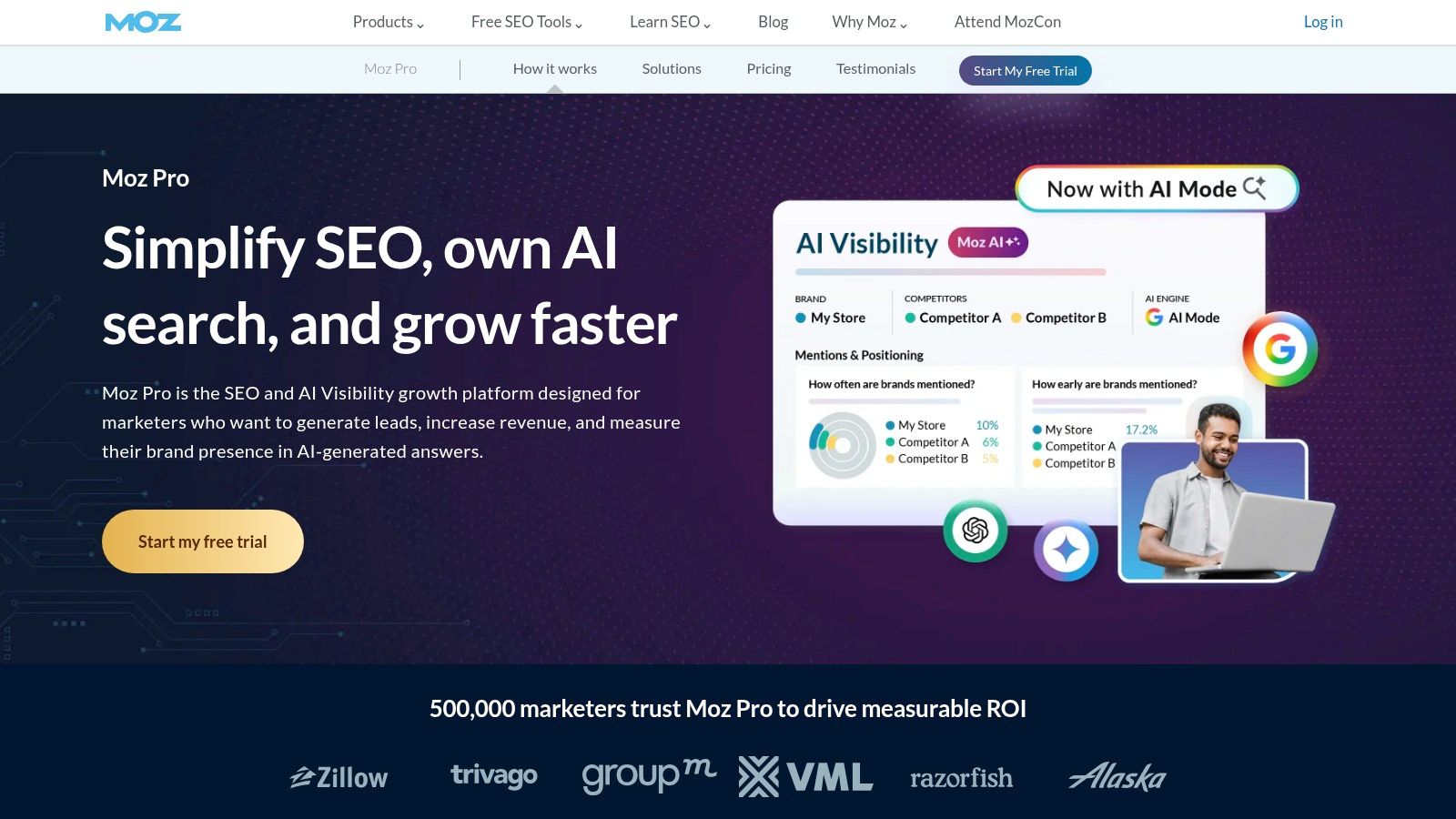
Its Keyword Explorer, SERP analysis, link research, and site auditing support familiar SEO investigations. Campaigns let you track your site alongside competitors, making the product useful for recurring comparisons rather than isolated domain lookups.
The listed entry plan is $49/month, with a 20% discount for annual payment, according to Moz Pro. Check campaign and tracking limits before treating the entry price as your likely total cost.
A clear boundary around SEO
Buy Moz Pro if your team's main question is how its search presence compares with relevant competitors. Use SERP analysis to inspect the pages buyers encounter, then connect that review with keyword targeting and site improvements.
Skip it if you need competitor pricing alerts, sales talk tracks, or dedicated assistant-answer benchmarking. Those aren't the central job of its SEO campaign workflow.
A competitor ranking above you is a reason to inspect the page and buyer intent, not a reason to copy its content.
During evaluation, check whether the campaign reports make differences understandable to the people doing the work. An accessible plan is only good value if your team can track the right competitors and translate findings into specific changes.
8. Crayon
Choose Crayon when product marketing needs to collect competitor changes and turn them into usable sales intelligence. That's a different buying decision from choosing a keyword research suite.
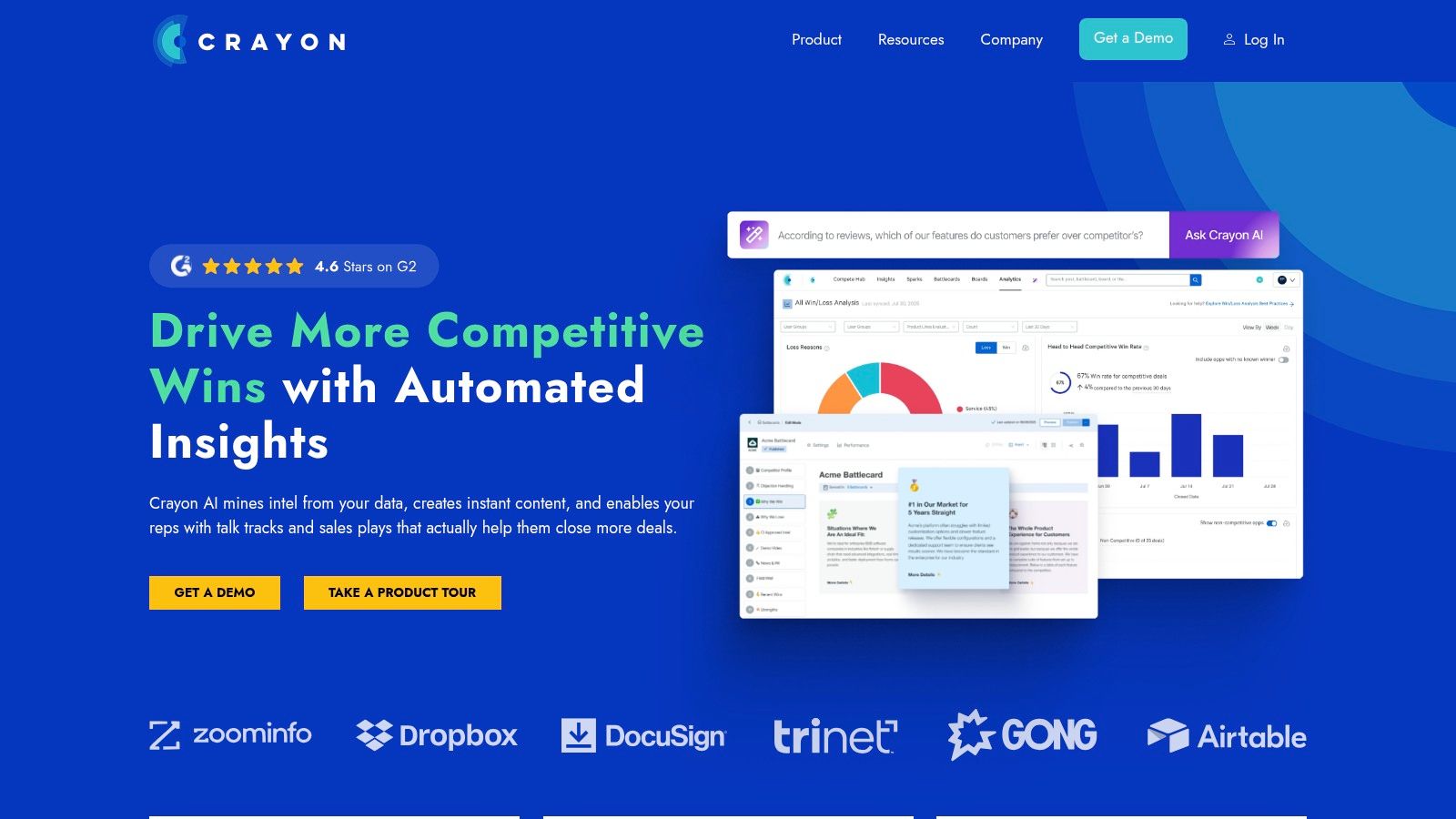
Crayon monitors public competitor signals, including website, product, pricing, review, and messaging changes. Its workflows support sharing findings and developing competitive content and sales talk tracks; pricing is quote-based rather than publicly listed.
The operational problem is substantial: respondents to the 2020 State of Competitive Intelligence survey reported spending 36% of their competitive-intelligence time researching competitors. The purchasing question is whether your team can turn collected signals into useful decisions, not just accumulate more alerts.
Buy for distribution and action
- Best fit: Established product-marketing and sales teams with recurring competitive questions and someone responsible for maintaining intelligence.
- Main advantage: A workflow built around competitor updates and enablement rather than SEO reporting.
- Main trade-off: You'll need a sales conversation to establish access, implementation needs, and cost.
Skip Crayon if you only need keyword gaps or occasional pricing-page checks. A structured intelligence platform adds responsibility as well as capability.
Compare competitive intelligence platforms using a concrete exercise: capture a meaningful product change, assess its relevance, and deliver an updated sales response. If nobody owns that final step, more monitoring won't solve the problem.
9. Klue
Klue is the option for sales-led B2B organizations that want competitor signals connected with deal-related learning. Its combination of monitoring, enablement, and win-loss work distinguishes it from traffic and SEO tools.
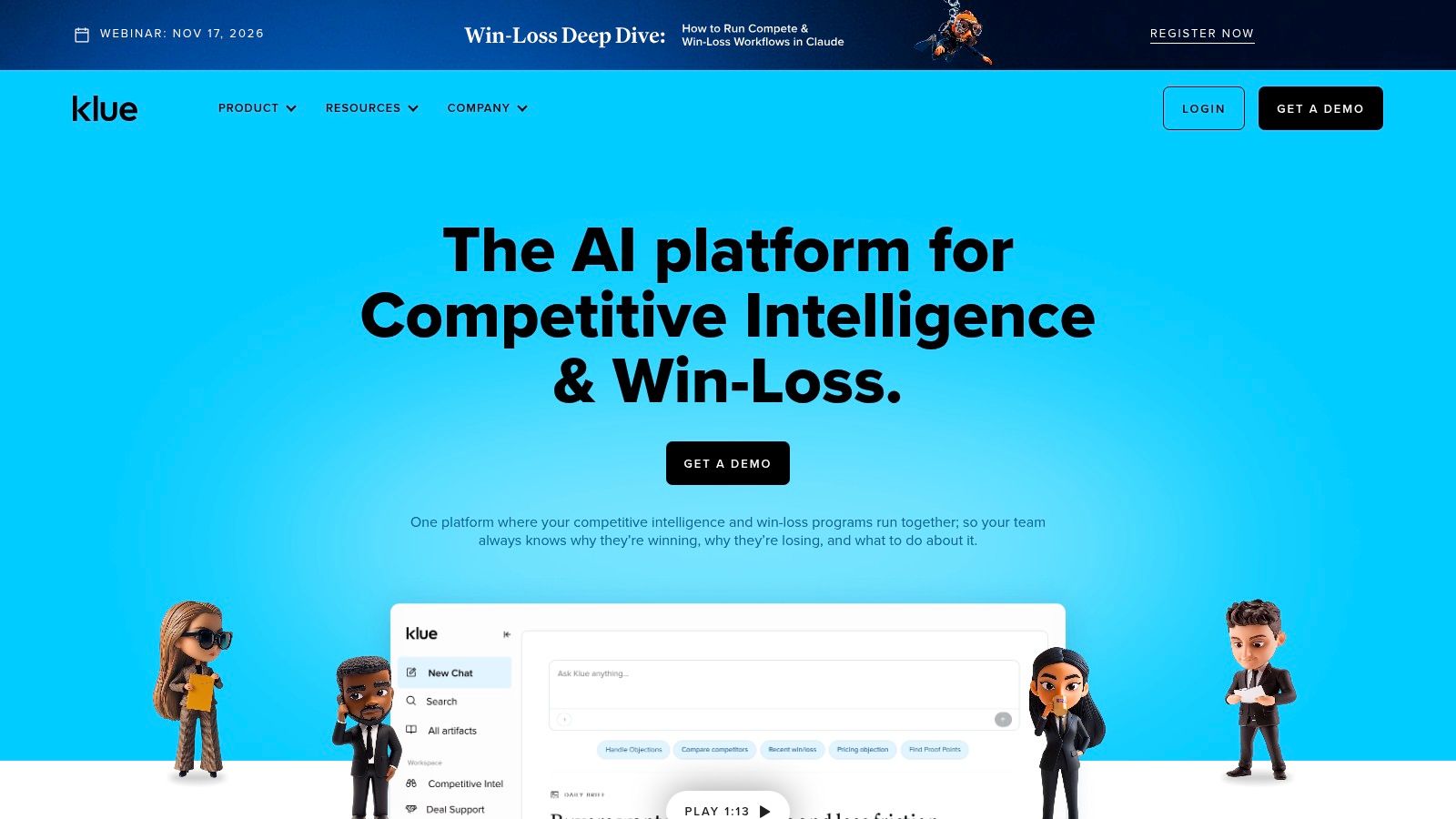
Klue tracks competitor web and market signals, including pricing, product changes, releases, and reviews. It also supports competitive insight sharing and win-loss analysis, with quote-based pricing.
A product marketer might use an external product announcement to update competitive guidance, then investigate whether buyers mention that capability during deals. Those inputs complement each other without proving that the announcement caused a win or loss.
Evaluate what sales actually receives
The useful output isn't just an alert feed. It's current, defensible guidance that salespeople can find and apply when a buyer raises a specific competitor.
- Buy it for: Cross-team competitive enablement and a workflow that includes deal-related insights.
- Demand in the demo: A complete path from a competitor signal to reviewed guidance and sales access.
- Skip it for: Basic traffic estimates, keyword comparisons, or lightweight monitoring without an enablement owner.
Klue can be more platform than a small team needs. Evaluate who will review incoming information, reconcile conflicting claims, and keep guidance current before discussing rollout.
The distinction between monitoring and useful competitive intelligence in marketing is especially important here. Your team must interpret evidence in the context of its buyers, positioning, and actual competitive conversations.
10. Visualping
If your question is what changed on a competitor's pricing or product page, choose Visualping before buying a large intelligence suite. It monitors selected webpages or page elements and provides alerts with before-and-after comparisons.
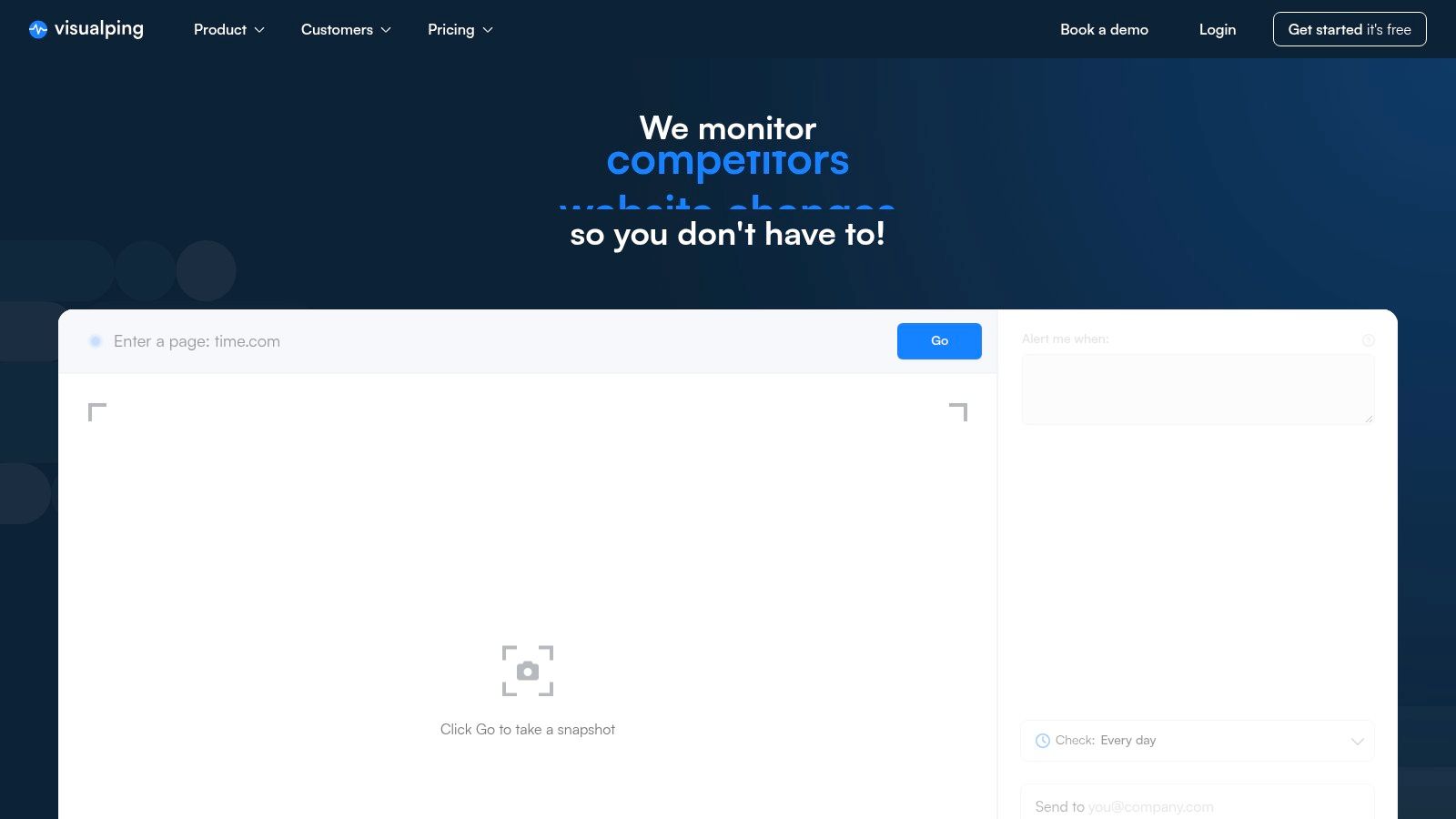
A free tier is available, with listed personal plans starting at $14/month and business plans at $140/month, according to Visualping. Check frequency, page allowances, and collaboration features vary by plan.
This is deliberately narrower than market intelligence. You choose the pages, configure monitoring, and decide what an observed change means.
Narrow monitoring can be enough
For a SaaS competitor, watch the pricing section, feature comparison, and relevant product pages rather than treating every webpage as equally important. Selected-element monitoring helps keep your attention on the content you need to inspect.
- Buy it for: Observable pricing, packaging, product, and messaging changes on known pages.
- Main limitation: Coverage depends on your configured pages and check schedule.
- Skip it for: Keyword discovery, traffic estimates, assistant recommendations, or proof of business impact.
Teams maintaining more technical monitoring workflows can also monitor structured artifacts for site changes alongside visible page content.
Interpretation matters: A changed price is observable evidence. Whether that change improved conversion, reduced churn, or altered competitive outcomes requires separate evidence.
Assign someone to review meaningful alerts. Visualping can show the page difference, but your team still needs to decide whether to update positioning, investigate packaging, or take no action.
How the competitor analysis app options compare on price, trial access, and primary focus
| Item | Listed Starting Price | Best For | Free Option or Trial | Primary Focus |
|---|---|---|---|---|
| MyMentions (Recommended) | $49/month | SaaS and digital-product teams tracking AI brand visibility | 7-day free trial on paid plans | AI-generated answer visibility and prioritized recommendations |
| Similarweb | $125/month billed annually | Comparing competitors' estimated traffic and audiences | Not specified | Digital market and traffic intelligence |
| Semrush | Not specified | Teams combining competitor research with SEO and PPC | Free trial on some toolkits | SEO, paid search, and AI visibility research |
| Ahrefs | $29/month | In-depth competitor SEO and backlink research | Limited free account | Organic search, backlinks, and rank tracking |
| SpyFu | Not specified | Search marketers researching competitor keywords and ads | Not specified | SEO and PPC competitor research |
| SE Ranking | $129/month | Teams combining competitor research with SEO workflows | Not specified | SEO research, rank tracking, and optional AI visibility |
| Moz Pro | $49/month | Teams seeking accessible, SEO-focused competitor tracking | Not specified | Keyword research, rank tracking, and site audits |
| Crayon | Quote-based | Product marketing and sales teams sharing competitive intelligence | Not specified | Competitor monitoring and sales enablement |
| Klue | Quote-based | Sales-led B2B teams tracking competitors and deal outcomes | Not specified | Competitive intelligence and win-loss analysis |
| Visualping | Free tier; paid plans from $14/month | Monitoring competitor webpage changes | Free tier available | Page and element change detection |
Building a Competitor Research Stack That Fits Your Team
Start with the question your team needs answered this quarter. Then choose a primary research tool and add complementary monitoring only where necessary. For many teams, a traditional research platform paired with a monitoring or AI-visibility product is more useful than expecting one subscription to answer everything.
Choose Similarweb for cross-channel market context. Choose Semrush when SEO and PPC teams need connected research, Ahrefs for organic-search and backlink investigation, SpyFu for focused search-advertising analysis, or SE Ranking and Moz Pro for ongoing SEO workflows. Choose Crayon or Klue when intelligence must reach product marketing and sales, and Visualping when selected page changes are the immediate concern.
Keep evidence types separate
An estimated traffic trend, a measured search position, an observed page edit, and an AI-answer sample aren't equivalent. Store each finding with its source, observation date, geography, and measurement definition so colleagues can understand what it supports.
For AI visibility, preserve the prompt, provider, locale, answer, and cited sources. A repeated claim across websites isn't necessarily independent confirmation, so inspect whether the underlying evidence is primary, current, and relevant.
Visibility also isn't revenue attribution. In a survey of 300 enterprise marketing, growth, and digital leaders, 26% couldn't track the journey from AI discovery to conversion, according to the study reported by Agility PR Solutions. Keep observed mentions separate from detectable referrals, qualified visits, and conversions rather than presenting a visibility score as commercial proof.
Run a decision-focused trial
Use your own competitor list, buyer questions, and commercially relevant pages. Ask the team to complete a real task, such as identifying a content gap, checking a packaging change, or investigating why an assistant recommends a rival.
- Test relevance: Does the tool cover the domains, markets, prompts, and sources you need?
- Test evidence: Can a colleague inspect the observation behind a recommendation?
- Test actionability: Can you assign the resulting work and assess what happened afterward?
Compare total access requirements, not just advertised entry prices. Seats, history, refresh frequency, prompt allowances, exports, and separate subscriptions can change the purchasing decision; use competitor tracking software pricing comparisons to structure that review.
Buy the smallest stack that answers your current questions reliably. Add coverage when your team can name the missing decision, the evidence required, and the person who will act on it.
MyMentions helps your team compare brand visibility, position, sentiment, and citation sources across supported AI providers, then turn prompt-level findings into prioritized investigations and improvements. Visit MyMentions to evaluate your buyer-intent prompts and see where AI-answer monitoring belongs alongside your traditional competitor research tools.