Most lists of top generative engine optimization strategies for AI visibility recycle an SEO checklist and rename it. Publish more, add FAQs, earn links. That advice assumes an assistant ranks your URL the way a search engine ranks a page. It doesn't. A generative engine selects passages, checks that the entity is the company you mean, and writes a summary from whoever looks easiest to trust.
The Princeton-led GEO paper is why I won't sell one universal playbook. Optimization raised visibility by up to 40% on that benchmark, and the same work found results varied substantially by domain. Treat the 40% as an upper bound, not a forecast for your category. Keyword stuffing is the popular move that fails first. Engines don't reward term frequency. They reward a fact they can extract, attribute, and repeat without guessing.
These eight tactics are ranked by how they change what an assistant says about a product. Each one names a failure mode, a check you can run, and a trade-off you accept before you start. Fix entity signals and crawler access before you pour budget into original research. A benchmark that bots can't read never reaches the answer.
Table of Contents
- 1. Structured Data and Schema Markup for AI Parsing
- 2. Original Data, Statistics, and Citable Research
- 3. Independent Reviews, Community, and Digital PR Citation Building
- 4. Answer-First, Question-Led Content Architecture
- 5. Entity Consistency and Knowledge Graph Presence
- 6. AI Crawler Access, Technical Discoverability, and llms.txt
- 7. Comparison, Alternatives, and Category-Defining Pages
- 8. Continuous AI Visibility Measurement and Prompt-Level Optimization Loop
- How the eight GEO strategies compare on signal type, effort, fit, and risk
- Turning Eight Tactics Into One Measurable Plan
1. Structured Data and Schema Markup for AI Parsing
The failure mode is markup that disagrees with the page a human reads. You ship SoftwareApplication schema with last quarter's price, the visible pricing page says something else, and the assistant picks one of them at random.
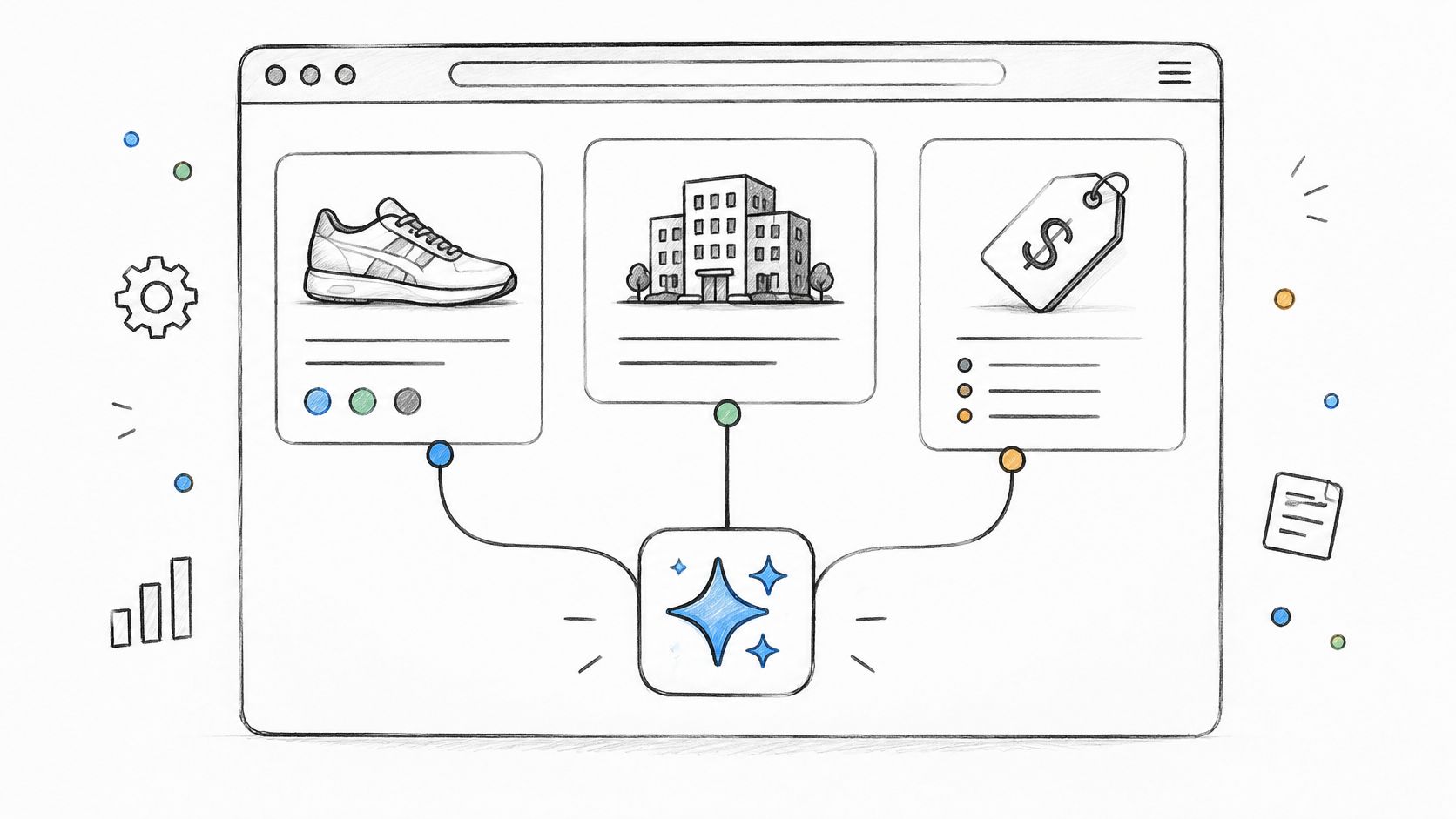
Say a billing product lists three tiers on the marketing page and a different middle tier inside JSON-LD. Retrieval systems use those labels to decide what the product is, what it costs, and whether the page is safe to cite. Ambiguous copy becomes a guess. Labeled facts become a description.
What to mark and what to ignore
Start on the homepage and the two pages sales send. Don't schema the whole blog in week one.
- Organization first: Name, logo, and
sameAslinks to LinkedIn, Crunchbase, and G2, so the entity isn't a namesake. - Product or SoftwareApplication next: Category, operating system, and pricing that match the visible copy, character for character.
- FAQPage only where buyers ask: Help articles with real purchase questions, not filler you invented for a rich result.
Practical rule: If a value isn't on the page, it doesn't go in the script.
Validate every template after a release and watch schema errors in Search Console. The trade-off is maintenance. Schema rots the week pricing changes, and a stale graph is worse than none. Teams that want a field-level walkthrough can follow this guide to implementing schema markup for UK trades and adapt the same checks to a SaaS template.
The check is simple. Ask the same product question in two assistants after the release and see whether the price and category match the live page.
2. Original Data, Statistics, and Citable Research
Say your analytics product publishes one quarterly benchmark: median time-to-first-value for 400 onboarded workspaces, method and date in the first paragraph. Journalists quote the number. Assistants can name you as the origin of the fact instead of a passing brand mention.
A controlled GEO study on a 10,000-query benchmark found that citations, quotations, and concrete statistics produced the strongest gains, roughly 30–40% relative improvement in Position-Adjusted Word Count and 15–30% improvement in subjective answer-quality impressions, as reported in the GEO paper on ar5iv. Keyword stuffing lost to those evidence-dense edits. That's a research result, not a promise for your engine or your niche.
How a thin study backfires
The failure mode is a vanity survey nobody asked for. You survey your own customers, skip the sample size, and wonder why Perplexity still cites a review site.

- One asset a quarter: Tie it to a question already in sales calls, not a topic you wish buyers cared about.
- Method up front: Sample, date, and what you didn't measure, in plain language on a short summary page.
- Three numbers only: The rest of the report can wait. Assistants lift the lines they can repeat.
The trade-off is speed. A real benchmark is slower than another blog post, and a sloppy one trains the model to describe you badly. Re-test the same prompts before and after, and use citation analysis for AI search engines to see whether your statistic is the one being quoted.
3. Independent Reviews, Community, and Digital PR Citation Building
The strongest GEO signal is the one you cannot publish yourself. Ranqo's GEO-at-scale research, a 2026 study of more than 100,000 responses across over 100 brands and five AI search engines, found that third-party sites such as review platforms, directories, and comparison pages account for a large share of AI citations. Your docs still matter, but outside pages often decide the wording an assistant repeats.
Say a project tool asks for a G2 review at go-live, keeps the Capterra listing current, and answers a real Stack Overflow thread with a doc link only when it helps. Those pages supply ratings, pros, cons, and a use case an assistant can summarize. A trade-publication quote backed by your own numbers does the same job with a different voice.
When more mentions make you worse
The failure mode is chasing volume. An outdated partner page that still lists a retired feature will get you named, then disqualify the buyer.
Inaccurate third-party copy can raise visibility and wreck the recommendation in the same answer.
- Claim the category profiles: G2, Capterra, Trustpilot, and the marketplace where your buyers already compare.
- Ask at a real milestone: Go-live or renewal, and follow that platform's rules. Don't bribe the review.
- Answer communities as a person: Reddit, Hacker News, and Stack Overflow punish undisclosed pitches. Disclose affiliation.
- Pitch data, not launch news: Journalists need a number and a named expert, not another feature bullet.
The trade-off is control. You can correct a listing and you can't force an editor. Verify the fix by rerunning the same buyer prompts after corrections and checking whether citations move from stale pages to current profiles. Audit recurring sources by intent, fix the inaccurate ones first, and leave flattering-but-wrong coverage alone until it's true.
4. Answer-First, Question-Led Content Architecture
A buyer doesn't type "project management software." They ask which tool fits a 15-person team that already lives in Slack and won't adopt another inbox. Open the page with that verdict.
Pew Research Center's analysis of 68,879 Google searches from 900 U.S. adults found that 18% of searches produced an AI-generated summary, 58% of participants saw at least one during the month, and 88% of those summaries cited three or more sources, according to Pew's short read on AI summaries. Multi-source answers are the default. A section that only makes sense after three scrolls won't be the passage they lift.
Write the section so it survives alone
The failure mode is a polished guide whose answer sits under the fold. Retrieval often works at passage level, and a vague heading gets the block skipped entirely.
- Mine real prompts: Sales calls, support tickets, and the questions that surface when you optimize a site for ChatGPT results.
- Answer in the first 40 to 60 words: Definition, comparison, or recommendation, then the steps.
- Mirror the buyer's phrasing: The heading should read like the question as it was asked.
- Revisit monthly: Expand the sections that never get named. Don't rewrite the ones that do.
A help center that retitles setup guides as questions, and a comparison page that leads each block with a verdict, both hand the model a clean extract. The verification step is simple. Lift the passage into an empty document and check whether a stranger could act on it without the rest of the page.
The trade-off is voice. Answer-first pages read blunt, and marketing teams hate cutting the intro.
Blunt wins the citation.
Deeper detail still has a place on the same page, underneath the answer. Objection handling, edge cases, and methodology can sit lower without hurting extraction, the way an FAQ that fields questions about ProfessionLens research carries specific concerns once the main point is stated.
5. Entity Consistency and Knowledge Graph Presence
An assistant described a client's product using a founder who had left two years earlier. The source was a directory nobody had opened since the seed round. The model wasn't confused. It was consistent with a bad page.
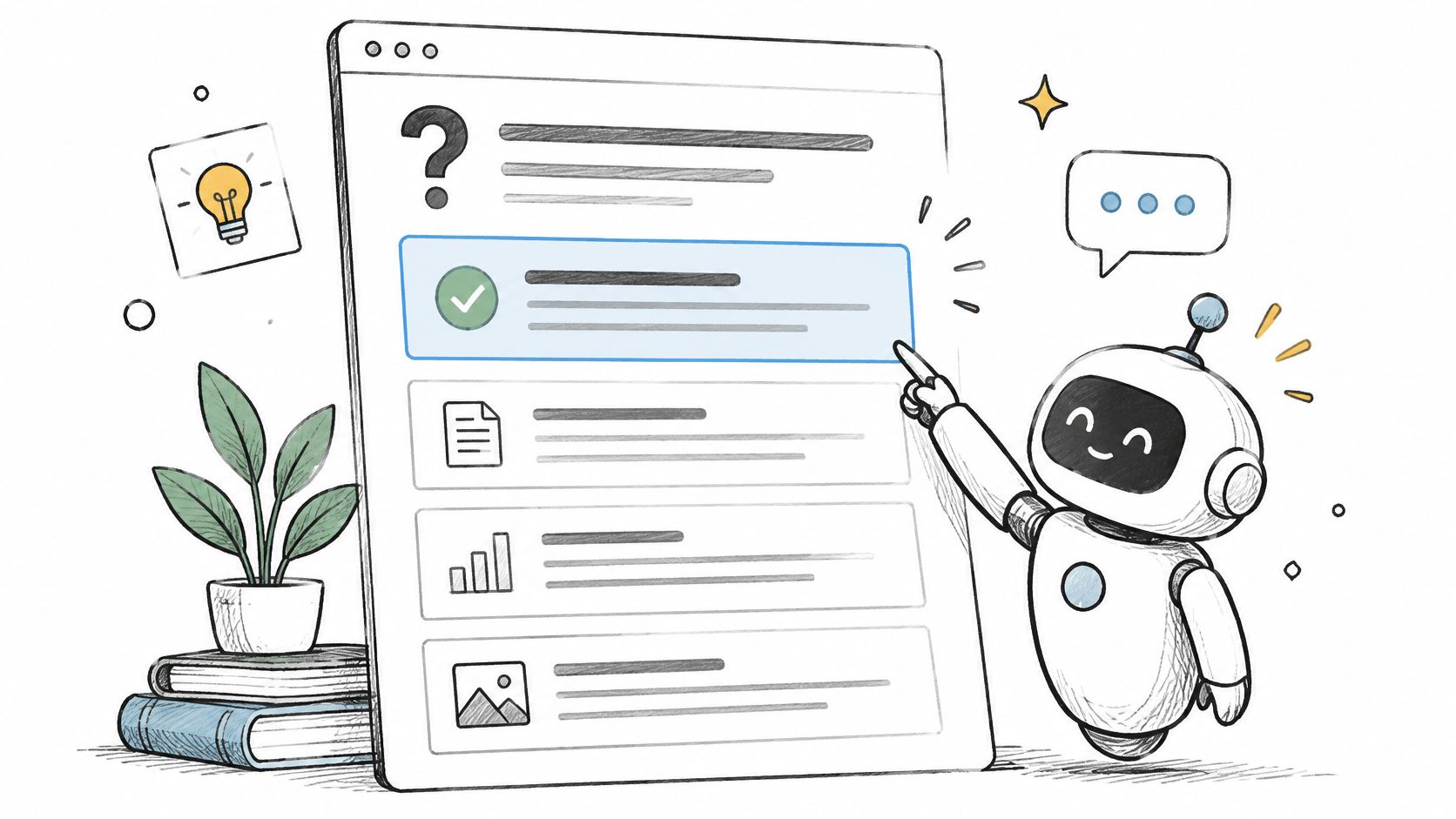
Generative engines store brands, products, and people as entities. If the homepage, G2, LinkedIn, and Crunchbase disagree on the name, category, or one-sentence description, mentions get merged with a similarly named tool or stuck on old positioning.
A facts sheet beats another slogan
Write one approved sheet: legal name, category, founding year, current leadership, logo, and a single sentence a stranger could repeat. Then make the public web match it.
- Audit the answer backward: When a description is wrong, find the page that taught it. Fix that page, not the prompt.
- Keep
sameAscurrent: Organization schema should point at profiles you still control. - Don't write your own Wikipedia: Follow each platform's disclosure rules and let independent coverage earn the entry.
- Read the language layer: Natural language processing for SEO is how you spot a category phrase the model uses and you don't.
The check is a five-prompt sweep after every launch: "What is [product]?", "Who makes it?", "Who is it for?", plus two competitor comparisons. The trade-off is boredom. Entity work doesn't produce a campaign asset, and it prevents the quiet failures that make every later tactic describe the wrong company.
6. AI Crawler Access, Technical Discoverability, and llms.txt
If the crawler can't fetch the page, nothing else on this list matters. A documentation site that renders the API reference only after JavaScript runs is invisible to plenty of AI bots, even when Google Search has no trouble with it.
Decide, in writing, what each agent may do. Common ones you'll see in logs are GPTBot, OAI-SearchBot, ClaudeBot, PerplexityBot, and Google-Extended. Allowing search crawlers while blocking training crawlers on private pages is a legitimate split. Blocking everything because a plugin defaulted that way is how you vanish.
llms.txt is a supplement, not a strategy
Jeremy Howard of Answer.AI proposed llms.txt in 2024 as a way to point models at short, priority docs. Adoption is uneven. I wouldn't staff a quarter around it until you can see a citation or referral change.
Test the money pages with JavaScript disabled. If the price, the category, and the setup steps aren't in the HTML, they aren't in the answer.
- Make the robots.txt choice explicit: One line per agent, reviewed when you add a new docs subdomain.
- Ship a current XML sitemap: Submit it in Search Console and Bing Webmaster Tools, and drop URLs you no longer want described.
- Point
llms.txtat the canon: Getting-started and API reference, not the blog archive. - Pair it with ordinary discoverability: The same hygiene you'd use to increase Google search visibility still decides whether a URL is even a candidate.
The trade-off is exposure. Opening the docs to answer-bots also opens them to training collection unless you separate the agents. Verify impact before you maintain a second content format nobody fetches.
7. Comparison, Alternatives, and Category-Defining Pages
Informational posts get you explained. Comparison pages get you recommended. Most high-intent prompts sound like "best tool for a 10-person support team," "alternatives to X," or "X versus Y." An assistant builds that table from pages that already compare products cleanly.
Say a project tool publishes three alternatives pages, each with the same columns: setup time, pricing model, admin controls, and who should not buy. An analytics platform publishes a "best tools for SEO teams" guide that includes competitors and states its own gap on log-file analysis. Both give the model a structure it can reuse without inventing a winner.
The page has to be willing to lose
The failure mode is a comparison that never lets the other product win. Assistants cross-check. A one-sided table gets dropped, or worse, summarized with a skeptical aside.
- Pick targets from losses: Deals you lost and competitors already named beside you, not a vanity list of giants.
- Say where they fit better: One short section is enough. Buyers and models both trust it.
- Freeze the table shape: Same columns on every page so extracts stay comparable.
- Date the refresh: Pricing and features quarterly, with the update date visible. Stale prices are how you get described as the expensive option.
The trade-off is brand discomfort. You will send some readers to a rival, and you will arm their sales team with your own criteria. That's cheaper than letting a review site define the category for you. For a sense of how dense these roundups get in another market, look at AI video tool comparisons from AIMVG and notice the verdict-plus-table pattern, not the products.
8. Continuous AI Visibility Measurement and Prompt-Level Optimization Loop
A click report will lie to you here. The Indian Express write-up of Pew's Google study notes that users clicked a traditional result on only 8% of searches with an AI Overview, versus 15% without one, and 26% ended the browsing session after an Overview, compared with 16% without it. You can be the brand in the answer and still watch sessions fall.
That's why I treat visibility as its own channel. Build a prompt set from sales conversations, support logs, and search data before you add competitors. Track, per provider, whether you're named, where you sit, the sentiment, and which URL got cited. One snapshot is the failure mode. Answers move by model, location, and week.
Turn the gap into an owner
- Read trends, not spikes: Several weeks, then a change. A single bad run isn't a rewrite.
- Assign the gap: Content, technical SEO, UX, or PR. An unowned prompt stays lost.
- Connect the visit: Branded search, assisted conversions, and AI-referred sessions, or you can't tell a good mention from a useless one.
- Watch the sources: AI search monitoring is how a team notices that reviews, not the homepage, are writing the answer, and moves budget there.
Say a team runs 50 buyer prompts each week, sees review sites dominating citations, and pauses a docs rewrite to fund review acquisition. Another team catches a sentiment drop in one assistant and traces it to a stale pricing URL. The trade-off is cost and patience. Prompt runs aren't free, and you will ignore dramatic one-day swings that feel urgent.
How the eight GEO strategies compare on signal type, effort, fit, and risk
| Item | Primary Signal | Typical Effort | Best For | Main Risk |
|---|---|---|---|---|
| Structured Data and Schema Markup for AI Parsing | Machine-readable facts about the business and its offerings | Low after templates are built | Clarifying product details and entity information | Markup can be ignored or harm trust if inaccurate |
| Original Data, Statistics, and Citable Research | Proprietary, verifiable data and statistics | High; research and updates take time | Earning citations, press coverage, and durable authority | Stale or poorly designed research undermines credibility |
| Independent Reviews, Community, and Digital PR Citation Building | Independent reviews, coverage, and community mentions | Ongoing and relationship-intensive | Building trust, shaping sentiment, and earning referrals | Negative reviews and poorly handled self-promotion can damage reputation |
| Answer-First, Question-Led Content Architecture | Direct answers in question-led, self-contained sections | Low to moderate for existing content | Matching conversational queries and improving content clarity | Mechanical execution can create thin or repetitive content |
| Entity Consistency and Knowledge Graph Presence | Consistent brand and product details across the web | Moderate, with coordination across teams | Reducing brand confusion and reinforcing identity | Updates may propagate slowly, and consistency alone does not earn recommendations |
| AI Crawler Access, Technical Discoverability, and llms.txt | Crawlable, renderable pages and clear access rules | Low to moderate technical effort | Making priority content accessible to AI crawlers | Blocking the wrong crawlers can reduce visibility; llms.txt support varies |
| Comparison, Alternatives, and Category-Defining Pages | Clear, balanced product and category comparisons | Moderate to high, with regular updates | Reaching high-intent comparison and “best tool” queries | Inaccurate or biased claims can undermine trust and create legal concerns |
| Continuous AI Visibility Measurement and Prompt-Level Optimization Loop | Repeated tracking of prompt visibility and citation sources | Ongoing measurement and analysis | Identifying visibility gaps and prioritizing improvements | Noisy results or biased prompt selection can mislead decisions |
Turning Eight Tactics Into One Measurable Plan
Start with the prompts you lose. A measurement loop tells you whether the assistant omits you, misnames you, or cites a third party that's wrong. Schema and entity cleanup are the first fixes, because every later asset inherits a bad name, a bad price, or a blocked URL. Crawl access is in that same first pass. If OAI-SearchBot or PerplexityBot can't render the docs, original research won't save the quarter.
Then spend. One data asset tied to a real buyer question, and a review profile you maintain, will move descriptions faster than another ten blog posts. Comparison pages come after the facts are stable. Publishing "X versus you" while your pricing schema is stale just scales the error.
Give each tactic one owner. Content doesn't own robots.txt, and PR doesn't own JSON-LD. Review on a cadence of several weeks, not a daily stand-up. Judge a change by three moves: whether you're named on the prompts that pay, whether the description's sentiment holds, and whether AI-referred visits do anything once they land.
Clicks will stay a weak scoreboard. Forbes Advisor's summary of the Pew analysis found that links inside AI summaries were clicked in only about 1% of visits. I still want the citation, and I also want the branded search and the demo that follow it. A dashboard of mentions alone is vanity. A dashboard of clicks alone misses the answer layer.
MyMentions is one place to run that loop. You keep a prompt library, compare how OpenAI, Google, Perplexity, Claude, and others describe the product, and see which docs, reviews, and partner pages are doing the citing. It won't pick the tactic for you. It will show which of the eight is changing the sentence.
None of this is guaranteed. Domain, engine, and prompt class all move the result, which is the lesson from the original benchmark. Ship one controlled change, re-test the same prompts, and keep the edit only if the answer got more accurate, not just longer.
MyMentions tracks how AI assistants name, rank, and cite your product across supported providers, then turns those prompt gaps into a backlog your team can ship. If you're sorting top generative engine optimization strategies for AI visibility by what changes the answer, start by seeing which prompts you lose and which sources write them. Visit MyMentions and set up the buyer-intent prompts you already hear on sales calls.